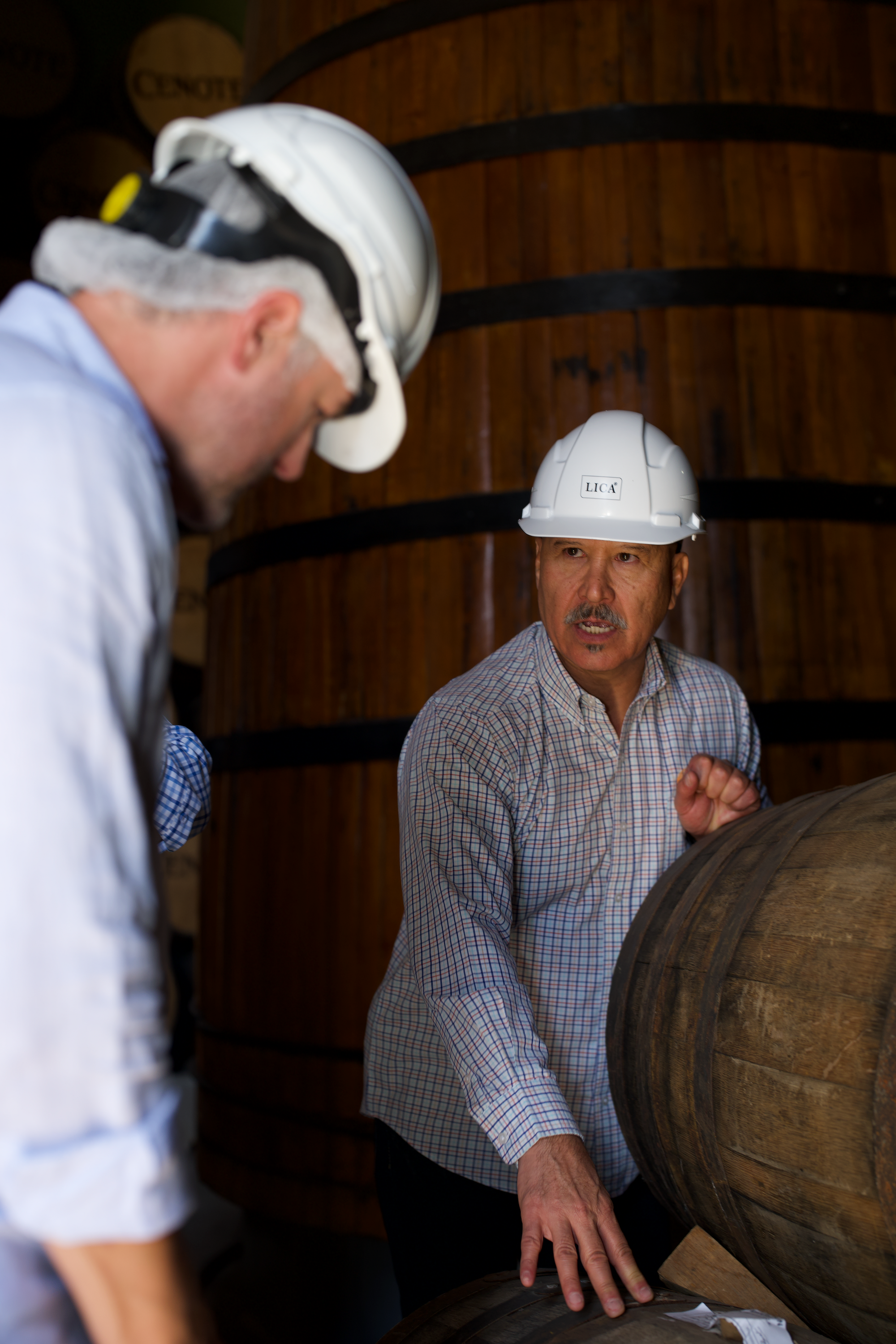
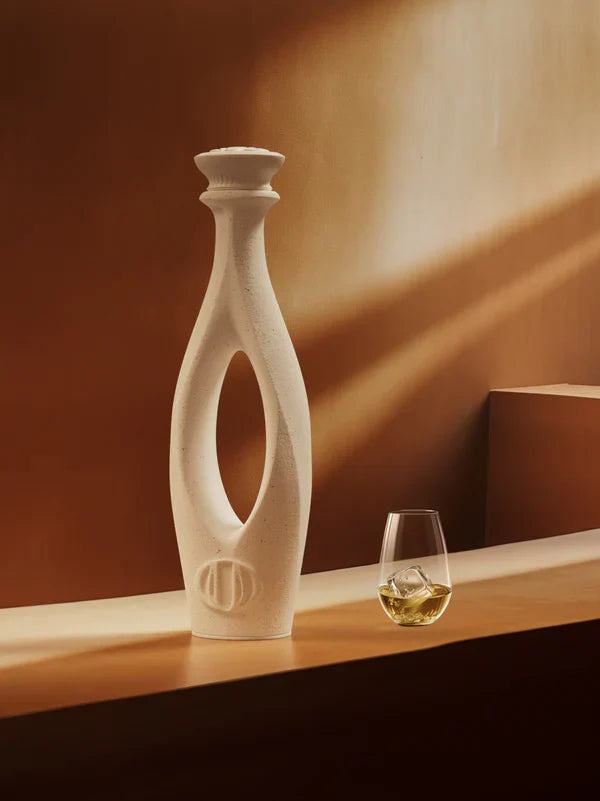
In Conversation: Alex Garcia
In Conversation with Alex Garcia
Master Blender, Olujo
Q: You work at 1,267 meters in Los Altos. What does elevation actually change?
A: The plant moves differently up there.
At that altitude, you have wider temperature swings between day and night. The agave responds by slowing down. It holds onto its sugars longer. It builds complexity over time instead of rushing toward maturity. That isn’t something you can recreate later.
It either exists in the plant, or it doesn’t. When I taste Los Altos agave, I can hear where it came from.
Q: There’s a lot of conversation around tradition in tequila. How do you think about it?
A: Tradition is important. But it’s not the goal.
The goal is clarity of flavor. If a traditional method serves the agave, we use it. If it doesn’t, we adjust. Every decision—autoclave, fermentation, distillation—is made in service of what the agave is already giving us. We’re not trying to impose a style. We’re trying to reveal one.
Q: Olujo is aged for eighteen months in double-barreled oak. Why that exact duration?
A: Because there’s a moment where the conversation is still balanced.
If you bottle too early, the spirit and the wood haven’t integrated. If you wait too long, the barrel starts to dominate. You’re no longer tasting the agave—you’re tasting oak. At eighteen months, I can still hear the plant when I open the bottle. That’s what I’m listening for.
Q: When people talk about a tequila being “smooth,” what does that mean to you?
A: “Smooth” is often a way of saying something is easy to drink.
But easy isn’t always interesting. For me, balance matters more than smoothness. Structure matters. Texture matters. I want a tequila that moves across the palate, that changes as you sit with it. If it’s too polished, you lose character.
And character is where everything lives.
Q: Olujo received 94 points from Wine Enthusiast. What does a score like that mean from inside the process?
A: It means the conversation opened.
Wine Enthusiast evaluates tequila alongside other aged spirits—whiskey, cognac, rum. To be scored in that context is different than being compared only within tequila. A 94 says the work belongs in that room. That it holds its place alongside categories that have been defined for generations.
We weren’t chasing that. But it’s good to have confirmation.
Q: When you open a bottle of Olujo, what do you want someone to notice first?
A: The agave.
Always.
I want it to still be audible when you open the bottle. Not covered. Not softened beyond recognition. Everything we do in production is in service of that.